Measured: when each market actually moves
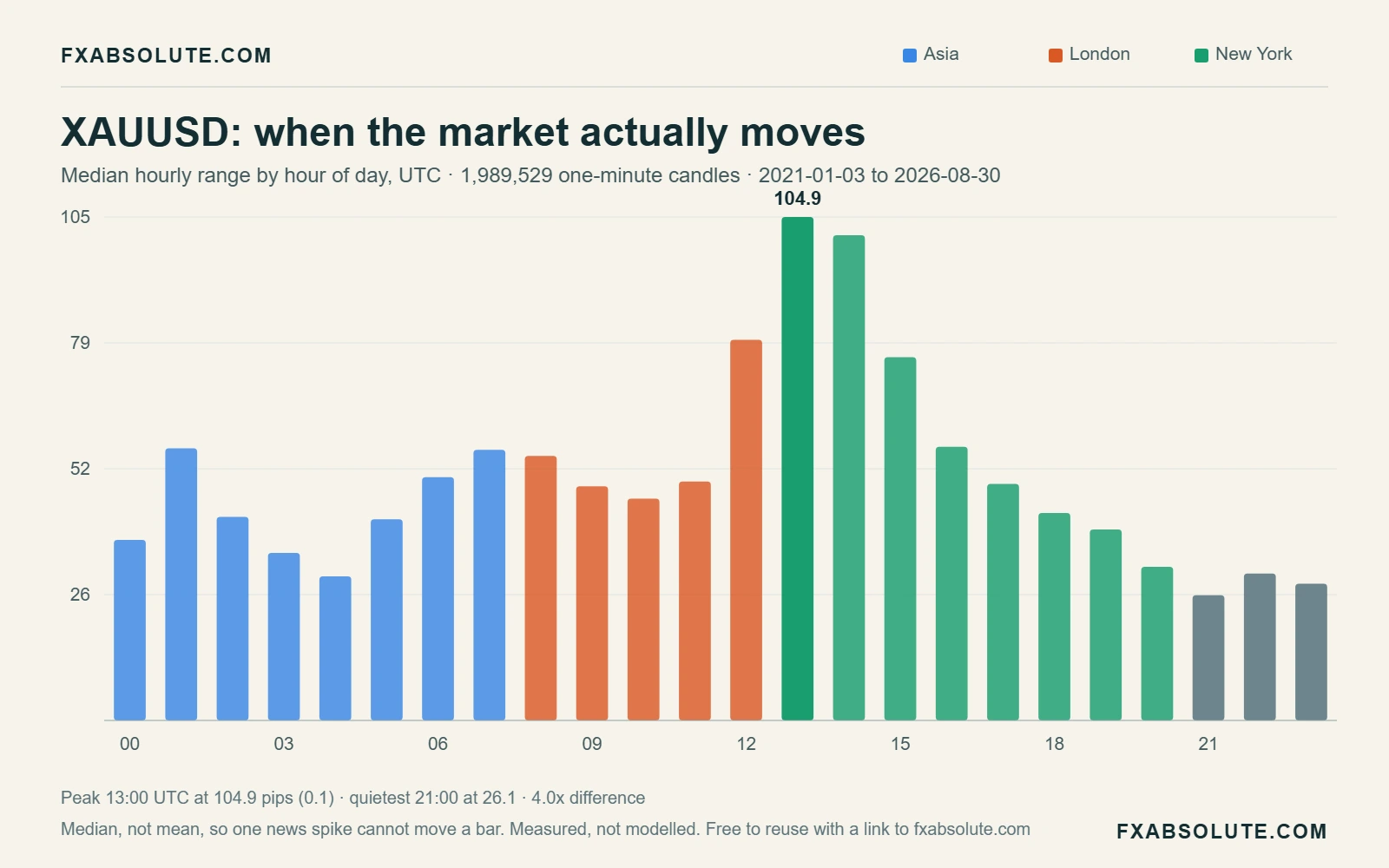
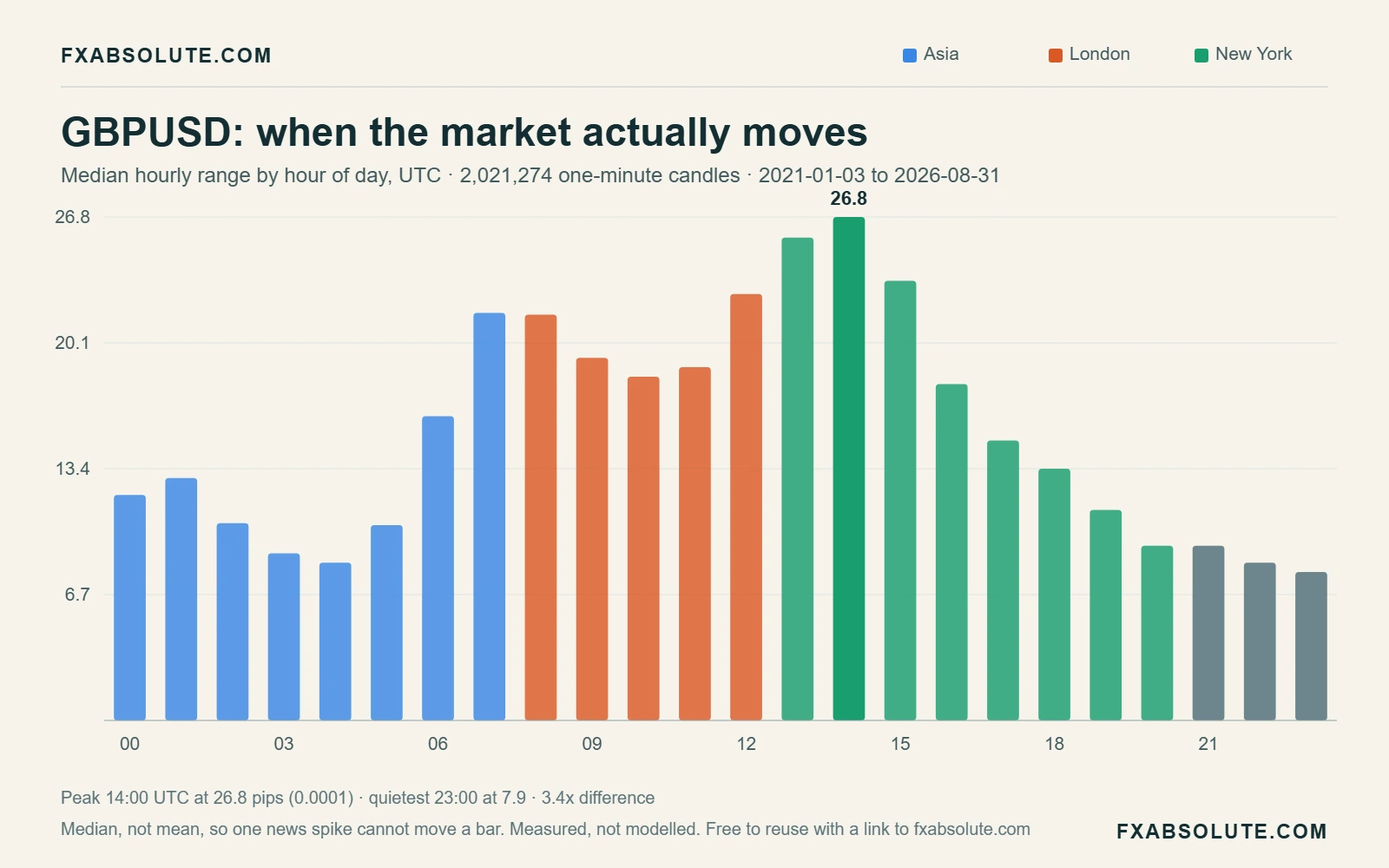
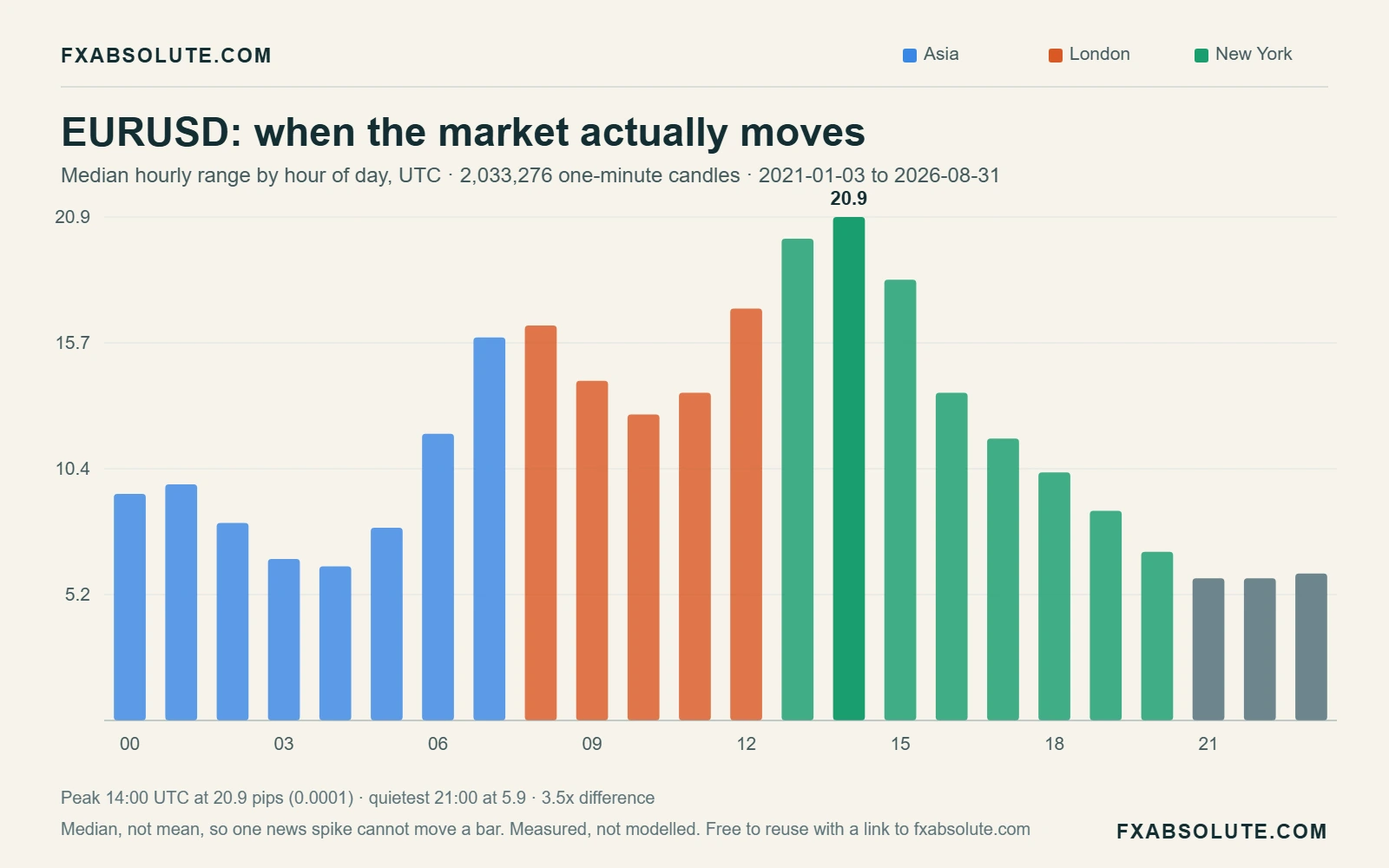
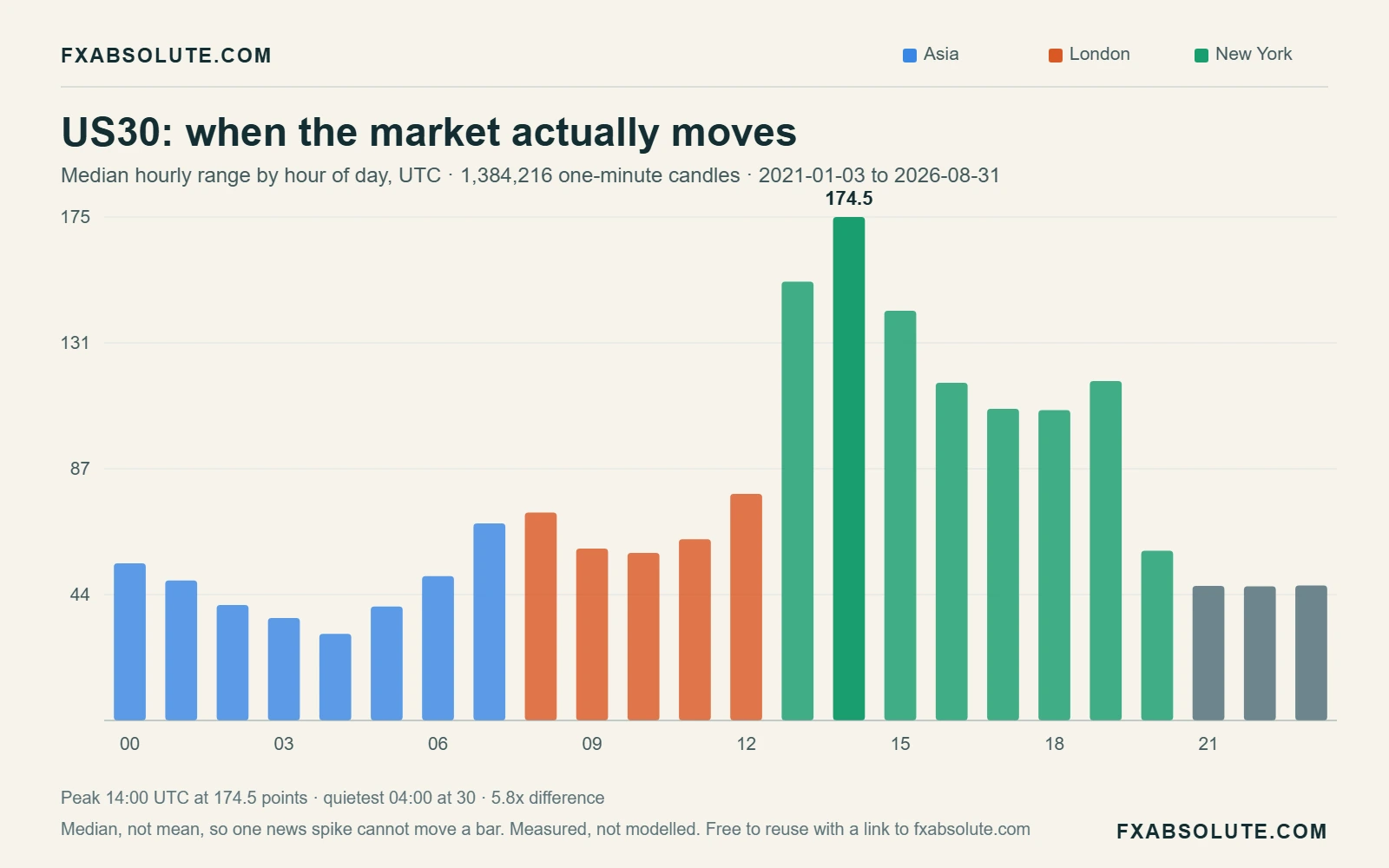
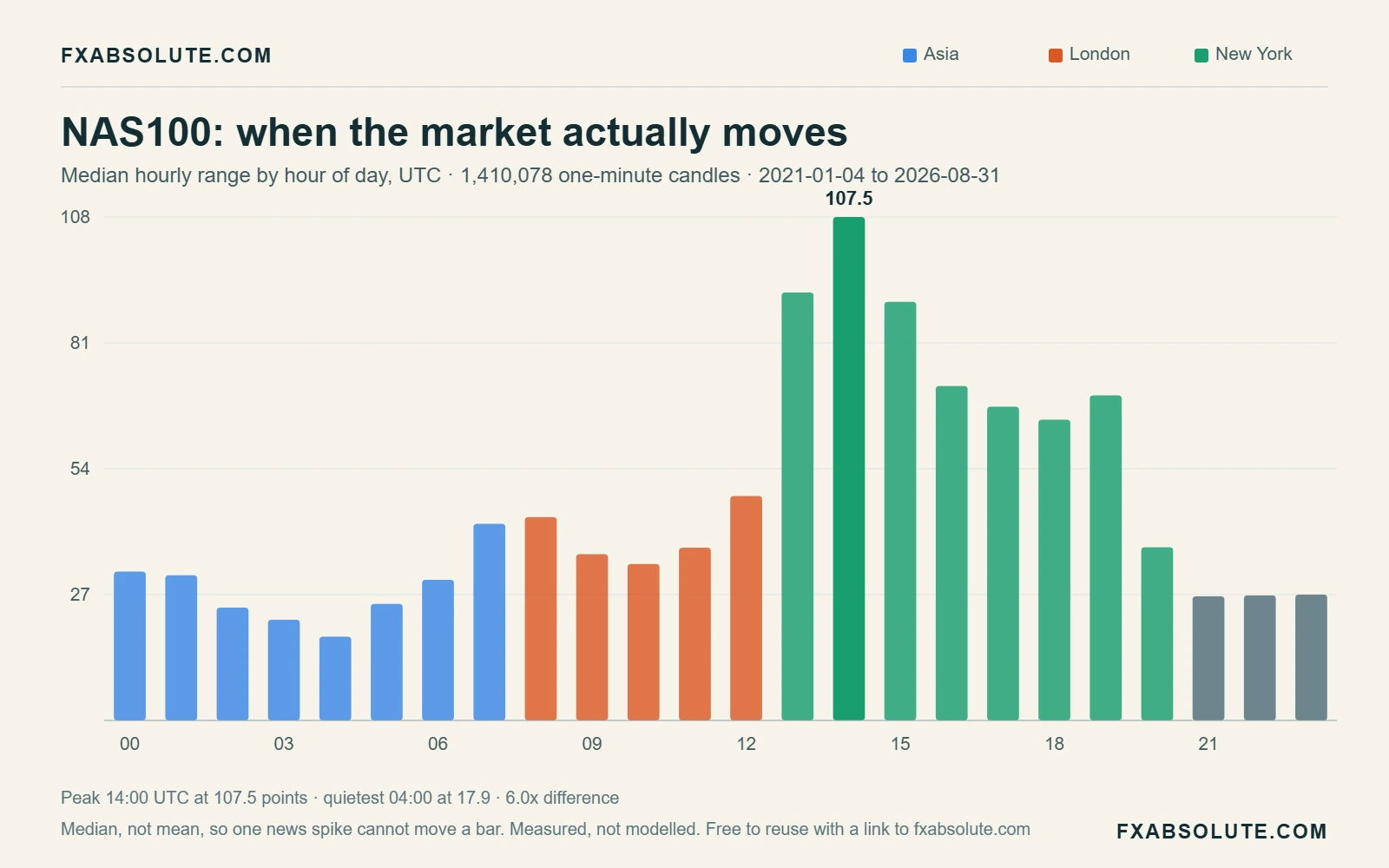
Volatility is the lifeblood of profitable forex trading — without it, there is no movement to profit from. But too much volatility without proper position sizing destroys accounts. This complete guide ranks all major pairs by volatility, explains ATR (Average True Range), identifies the most volatile sessions and days, and shows you exactly how to use volatility data in your FXAbsolute backtesting sessions.
Build a range card
FIELD 23For each pair, record the high-low range of the previous twenty complete sessions and keep the median beside the largest and smallest observations. Then tag the current session by time and scheduled event. This gives a more honest volatility context than assuming one fixed pip range applies all year.
Volatility describes movement; it does not say whether that movement is tradable.
Volatility measures how much a forex pair's price moves over a given period. Higher volatility means larger price swings in both directions — more opportunity and more risk. Lower volatility means smaller, slower moves — less opportunity but also less risk of being stopped out by sudden spikes.
Volatility is affected by:
ATR is the most practical measure of volatility in trading. Developed by J. Welles Wilder, it measures the average range of a candle (from high to low) over a specified number of periods — default is 14 periods.
Average Daily Range (ADR) in pips, based on 2023–2026 typical market conditions. Ranges expand significantly during major news events.
| Rank | Pair | Avg Daily Range | Category | Best Session |
|---|---|---|---|---|
| #1 | GBPJPY | 150–180 pips | Most Volatile Cross | London Open |
| #2 | XAUUSD | 1,500–3,000 pips* | Metal / Safe Haven | London-NY Overlap |
| #3 | GBPUSD | 100–130 pips | Major — High Volatility | London Session |
| #4 | EURJPY | 95–120 pips | Cross — Volatile | London-Tokyo Overlap |
| #5 | GBPCHF | 90–115 pips | Cross — Volatile | London Session |
| #6 | EURUSD | 80–100 pips | Major — Standard | London-NY Overlap |
| #7 | USDJPY | 75–95 pips | Major — Standard | Tokyo + NY Session |
| #8 | AUDUSD | 60–85 pips | Major — Moderate | Sydney + London |
| #9 | USDCAD | 60–80 pips | Major — Moderate | NY Session |
| #10 | USDCHF | 55–75 pips | Major — Low Volatility | London Session |
| #11 | NZDUSD | 50–70 pips | Major — Lowest Vol | Sydney Session |
*XAUUSD pip = $0.01 — "pips" for Gold are a large number but small dollar amount until multiplied by lot size. Dollar move per day: ~$15–$30.
GBPJPY earns its reputation as the most volatile and unpredictable major pair. Here is what traders need to know before backtesting it on FXAbsolute:
| Session | Hours (EST) | Pairs Active | Volatility Level | Best For |
|---|---|---|---|---|
| Sydney Open | 5 PM – 12 AM | AUD, NZD, JPY | Low | AUDUSD, NZDUSD |
| Tokyo Session | 7 PM – 4 AM | JPY, AUD, NZD | Low-Medium | USDJPY, AUDJPY |
| London Open | 3 AM – 8 AM | GBP, EUR, CHF | High | GBPUSD, EURUSD |
| London-NY Overlap | 8 AM – 12 PM | All majors | Highest | EURUSD, GBPUSD, Gold |
| New York Afternoon | 12 PM – 5 PM | USD pairs | Medium | USDCAD, USDCHF |
| Day | Volatility | Notes |
|---|---|---|
| Monday | Low-Medium | Slow start, market positioning, avoid scalping |
| Tuesday | High | Best day — market warmed up, full institutional participation |
| Wednesday | High | Usually most active mid-week; FOMC meetings often Wednesday |
| Thursday | High | Strong momentum; often follow-through from Wednesday moves |
| Friday | Medium | NFP (first Friday); otherwise profit-taking, early closes by 12 PM EST |
FXAbsolute gives you 5 years of real GBPUSD, USDJPY, and XAUUSD data. Filter your backtesting by session and see how your strategy performs across different volatility conditions.
Start Volatility Backtesting Free →USDCHF and NZDUSD are the least volatile major pairs. This does not make them bad — it makes them appropriate for different situations:
When you backtest on FXAbsolute, volatility awareness should influence:
What is the most volatile forex pair?
GBPJPY is consistently the most volatile major cross pair at 150–180 pips average daily range. XAUUSD (Gold) moves 1,500–3,000 pips per day but at $0.01 per pip per lot, making the dollar equivalent around $15–$30 per day per standard lot.
What is ATR in forex trading?
ATR (Average True Range) is a 14-period average of the True Range (which accounts for gaps between candles). It objectively measures how much a pair moves on average, helping traders set proportional stop losses and take profits.
When is forex most volatile?
The London-New York overlap session (8:00 AM – 12:00 PM EST) is the most volatile period. Tuesday, Wednesday, and Thursday are the most volatile days of the week. Q1 and Q4 are the most volatile quarters of the year.
How does volatility affect backtesting?
Backtesting in high-volatility periods will show larger wins and losses. Your stop sizes, position sizes, and targets must be calibrated to the actual volatility of the pair and period you are trading. Use ATR to set stops relative to the market's natural range, not fixed pip amounts.
FXAbsolute gives you access to low-volatility summer sessions and high-volatility Q4 spikes in real historical data across all 15 instruments. No download, no credit card.
Backtest Volatility Strategies Free →One reproducible testing idea, with its rules, limitations, and review questions made explicit. In your inbox every week.
Measured from 28 million candles
Beginner exploration
Open each answer for a plain-language way to read Forex Volatility Guide, test it carefully and decide what to explore next.
This page focuses on “Forex Volatility Guide”.Complete forex volatility guide. Discover the most volatile forex pairs (GBPJPY, XAUUSD), average daily range tables, most volatile sessions and days, and how to use ATR in your backtesting.For “Forex Volatility Guide”, a beginner should identify what the evidence guide measures, assumes or teaches before acting on its conclusion.Treat this page's account of “Forex Volatility Guide” as a learning reference rather than a prediction, signal or promise of future performance.
For “Forex Volatility Guide”, confirm the population, sample size, clock, units and calculation behind the headline number.While exploring “Forex Volatility Guide”, compare the median, spread of outcomes and exceptions instead of reading only the average or best row.Keep your “Forex Volatility Guide” record honest: use the statistic to frame a test or risk assumption, not to predict the next candle.Before leaving “Forex Volatility Guide”, recheck the result on a separate period before turning a descriptive pattern into a rule.
Turn one idea from “Forex Volatility Guide” into a rule with explicit inputs, dates, costs and pass-or-fail conditions.Ask AI to expose missing assumptions in that “Forex Volatility Guide” test, not to guess the next market move.Use the FXAbsolute AI Backtesting Lab to inspect calculations connected to “Forex Volatility Guide” and the assumptions behind them.Reproduce any important “Forex Volatility Guide” result and reserve unseen data before deciding that an apparent pattern is useful.
Continue your exploration of Forex Volatility Guide with the beginner AI prompt guide, or inspect public calculations in the AI Backtesting Lab.